Navigating Tiered Loyalty Structures: How Progressive Bonuses Encourage Continued Engagement
Theo Schmidt · Nov 19, 2026
Navigating Tiered Loyalty Structures: How Progressive Bonuses Encourage Continued Engagement
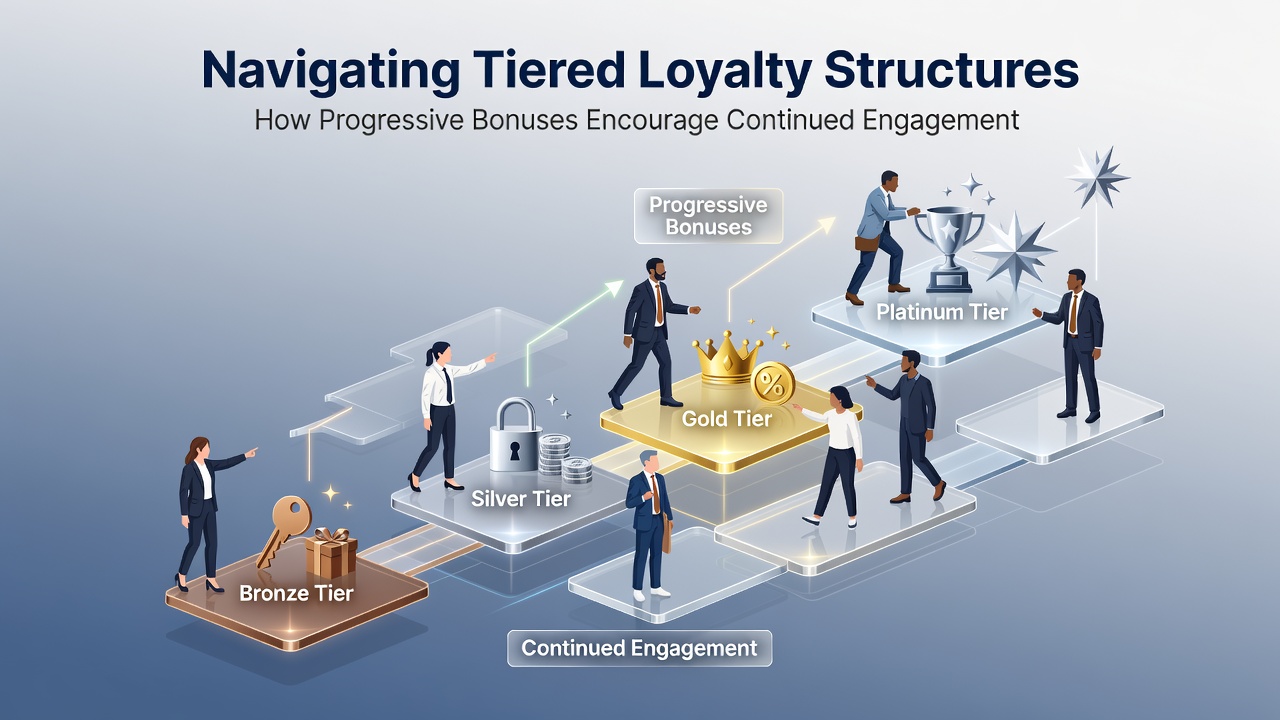
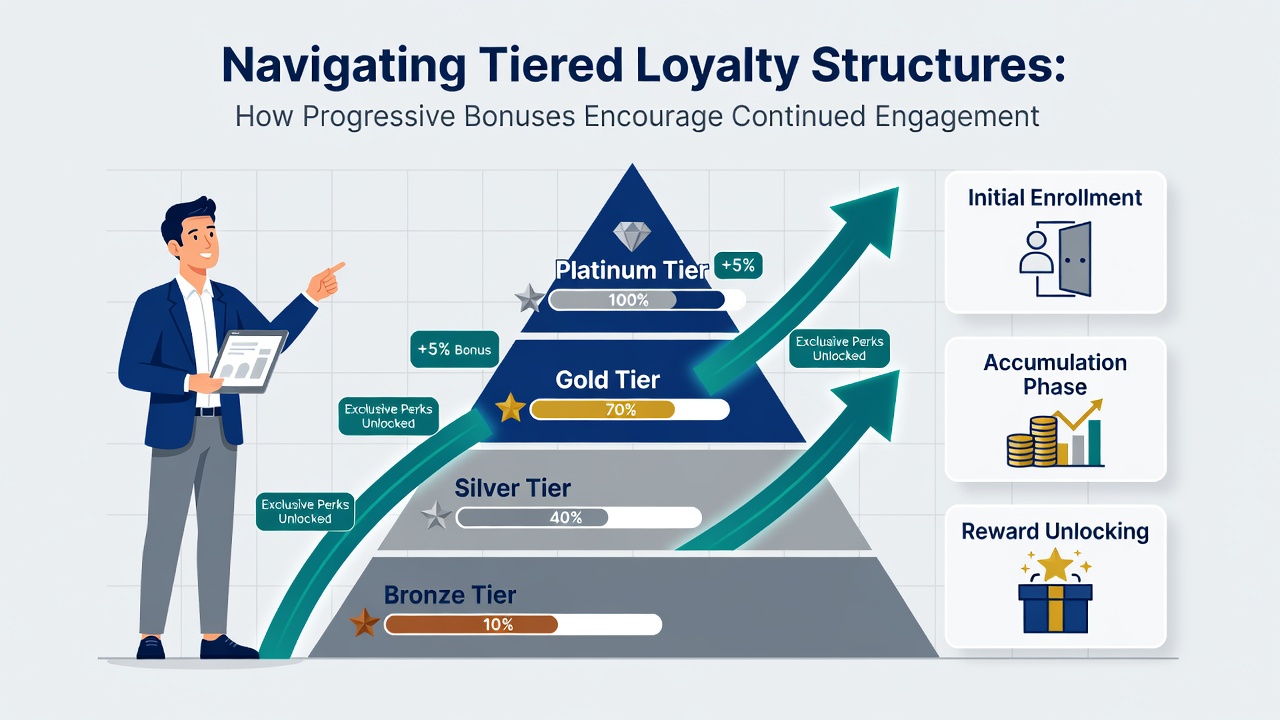
Online gaming platforms have developed tiered loyalty structures that reward players based on consistent activity, and these systems rely on progressive bonuses to maintain long-term participation. Data from industry reports shows that operators segment users into levels such as bronze, silver, gold and platinum, with each tier unlocking higher reward rates and additional perks. Players advance through these tiers by accumulating points from wagers, deposits and other tracked behaviors, while the bonus structure scales accordingly to reflect increased engagement.
Progressive bonuses typically include cashback percentages that rise with tier status, free spin allocations that grow in volume, and deposit match offers that improve in value. Operators calculate advancement thresholds using formulas tied to total handle or deposit volume over defined periods, and many programs reset or adjust these metrics monthly or quarterly. Research indicates that such scaling mechanisms create clear pathways for continued play, since users see tangible increases in return rates as they climb levels.
Mechanics of Point Accumulation and Tier Progression
Most loyalty frameworks award one point for every dollar wagered on eligible games, though some platforms apply multipliers for specific titles or during promotional windows. Once a player reaches the required point total for the next tier, the system automatically upgrades their status and applies new bonus rates to future activity. Observers note that this automation reduces friction, allowing participants to focus on gameplay rather than manual claims. Studies from academic sources reveal that players who monitor their progress through dashboard tools tend to extend session lengths and increase deposit frequency to hit upcoming milestones.
Examples of Bonus Scaling Across Tiers
At entry level, users might receive five percent cashback on losses along with ten free spins weekly, whereas mid-tier members obtain eight percent cashback and twenty spins, and top-tier accounts access twelve percent cashback plus fifty spins plus exclusive event invitations. The incremental improvements encourage sustained volume because each additional tier delivers measurable gains in reward density. Industry data compiled by the American Gaming Association demonstrates that retention rates climb when operators display these escalating benefits clearly within account interfaces.
Operators also layer time-limited challenges onto the base structure, such as weekend point multipliers or deposit streak bonuses, which accelerate progression for active users. These temporary boosts integrate with the permanent tier system without disrupting the core progression logic. When players complete such challenges, their accumulated points count toward both immediate rewards and long-term tier advancement simultaneously.
Regional Regulatory Approaches to Loyalty Program Design
Government agencies in multiple jurisdictions have issued guidelines on how loyalty mechanics must be disclosed and structured. The Nevada Gaming Control Board requires operators to publish clear explanations of point values, expiration rules and tier qualification criteria before any player enrolls in a program. Similar transparency obligations appear in Australian state regulations administered by the New South Wales Independent Liquor and Gaming Authority, where operators must separate bonus terms from standard game rules. These frameworks aim to ensure participants understand how progressive rewards accumulate and what conditions apply to redemption.
In November 2026, several Canadian provincial regulators updated their reporting requirements to include quarterly summaries of loyalty program participation rates and average bonus redemption values. The changes allow oversight bodies to monitor whether progressive structures disproportionately influence spending patterns among frequent users. Operators responded by refining their communication materials to highlight both the benefits and the play-through conditions attached to each tier reward.
Integration with Broader Player Retention Strategies
Tiered systems rarely operate in isolation. Platforms combine them with personalized offers generated from behavioral analytics, seasonal promotions and cross-game incentives. Data compiled by the World Lottery Association indicates that integrated approaches produce higher average revenue per user when progressive bonuses align with individual game preferences. For instance, a player who favors table games might receive tier-based rebates specifically on blackjack or roulette wagers, while slot enthusiasts see enhanced free spin packages calibrated to their historical bet sizes.
Program administrators track redemption rates and session metrics to adjust tier thresholds and bonus values over time. Adjustments typically occur after analysis of aggregate player data rather than individual accounts, preserving fairness across the user base. Those who study loyalty economics note that small, incremental improvements to mid-tier rewards often generate larger overall engagement lifts than large changes at the uppermost levels alone.
Conclusion
Tiered loyalty structures function through measurable point systems and graduated bonus scales that reward ongoing activity with improved return rates. Regulatory bodies across North America and Australia enforce disclosure standards that keep these mechanics transparent, while operators refine the programs using participation statistics gathered in late 2026. The combination of automated progression, time-bound challenges and region-specific compliance measures creates an environment where progressive bonuses remain central to sustained player interaction across gaming platforms.